Reset ustawień
 Kontrast
 Widok
Widok Czytelność
 Czcionka
 Znaki
Znaki Interlinia
 Słowa
Słowa Akapity
 Deklaracja dostępności



CAKE/FSR conference about the future of the EU ETS
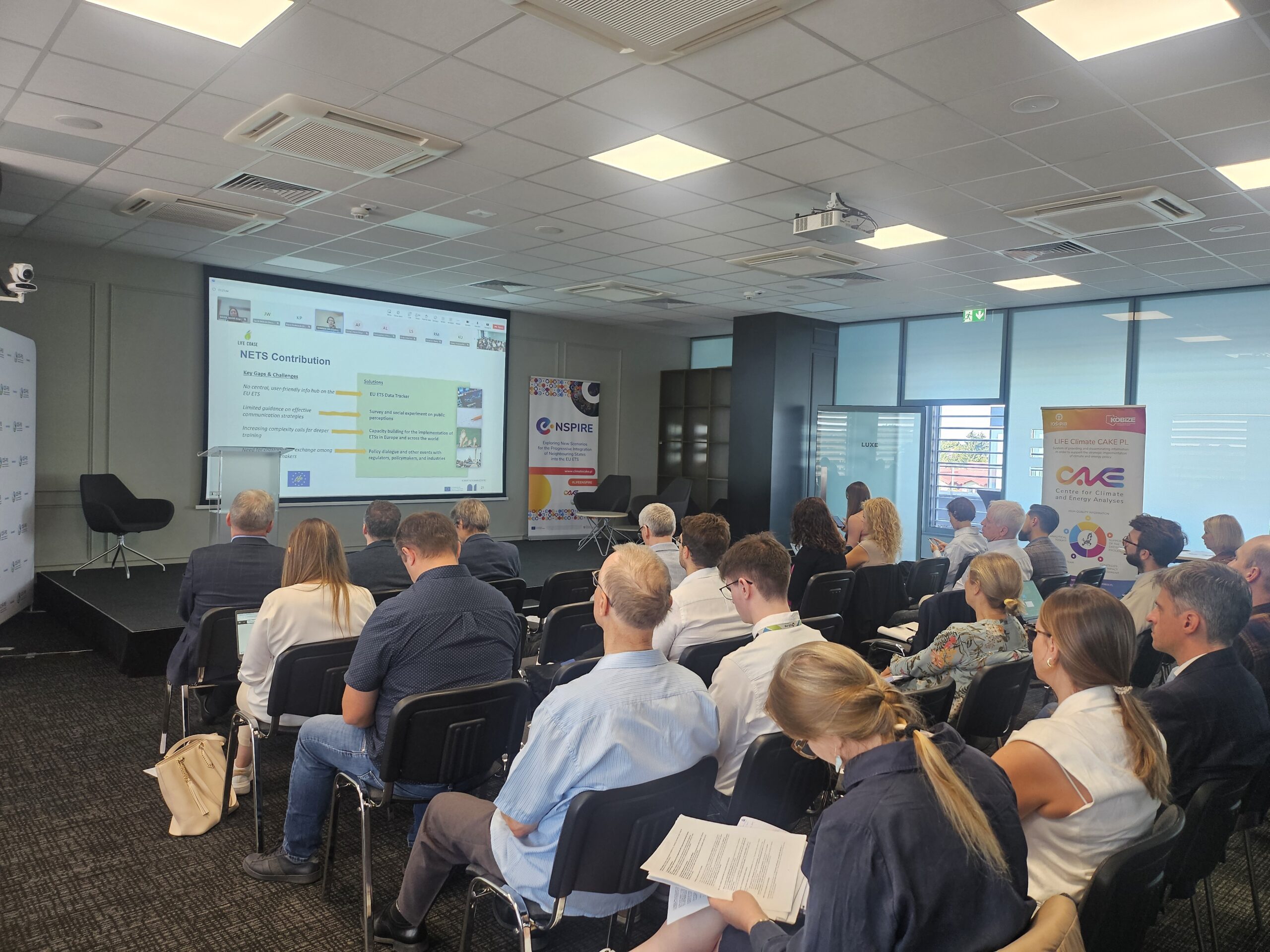
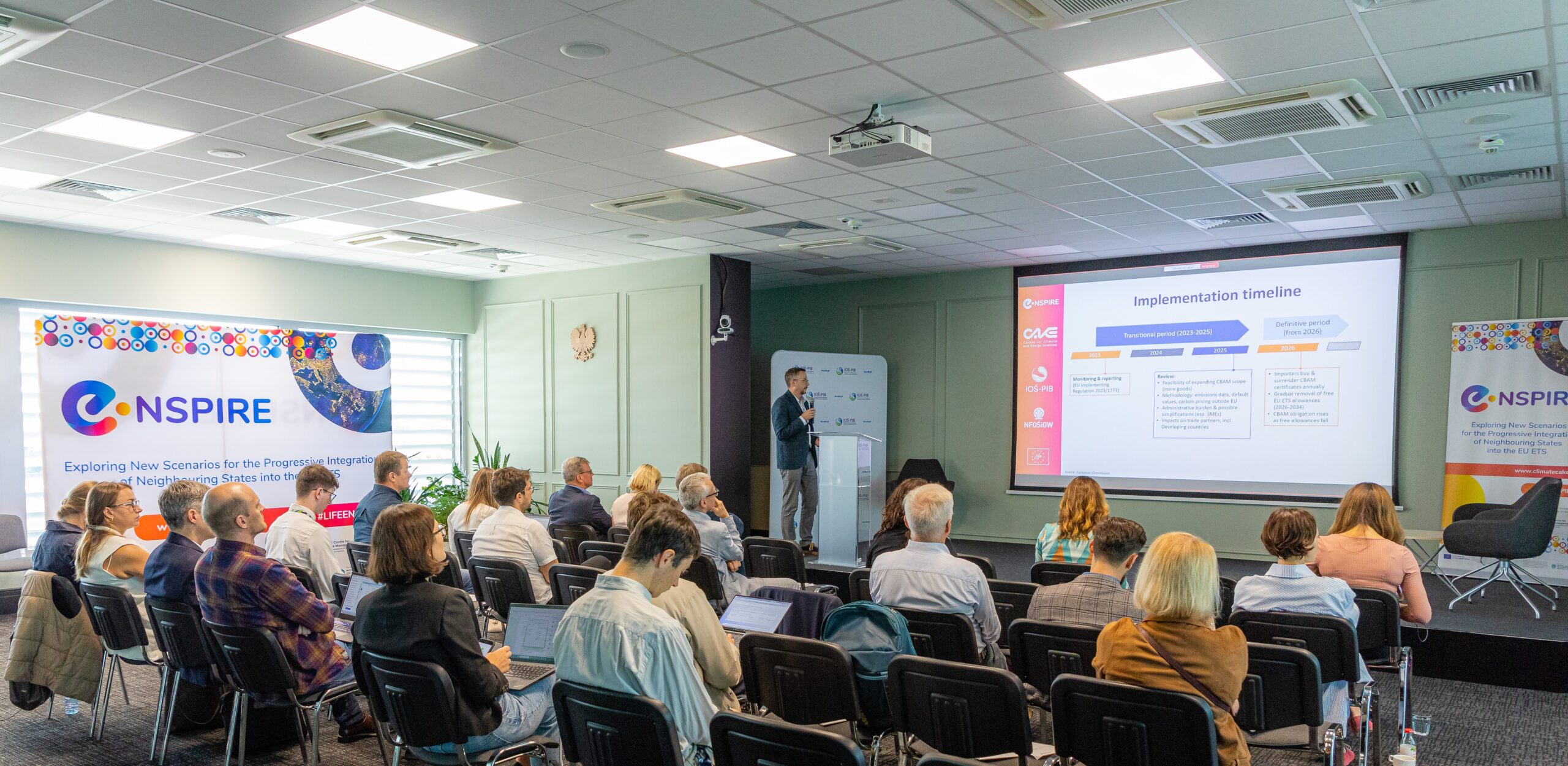
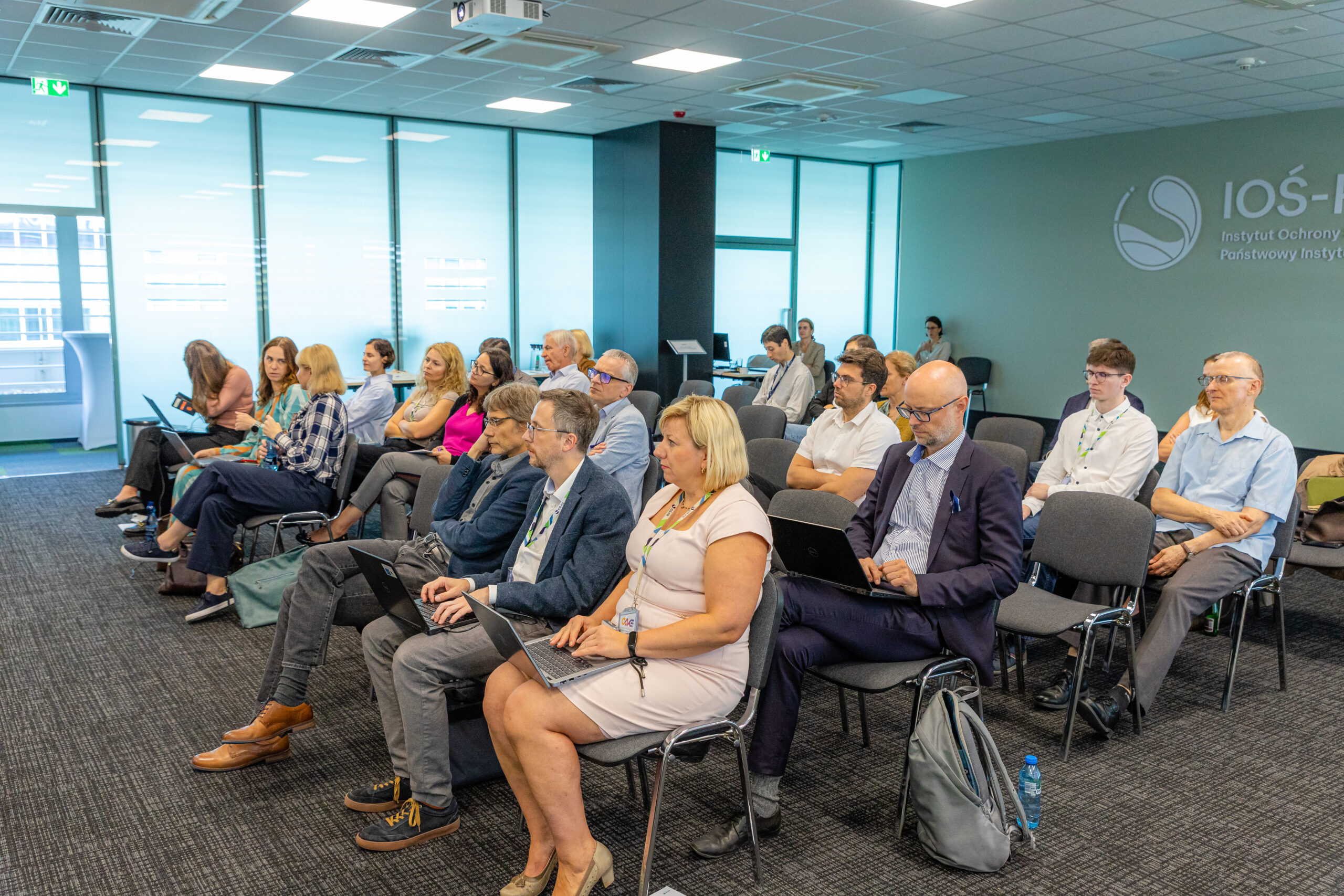
On 12 September 2025, a conference entitled “Shaping the Future of the EU ETS: Lessons, Challenges, and Pathways for Reform” was held at the headquarters of the Institute of Environmental Protection – National Research Institute (IOŚ-PIB) in Warsaw and online. The event was co-organised by the Centre for Climate and Energy Analysis (CAKE) operating at KOBiZE/IOŚ-PIB and the Florence School of Regulation – European University Institute (FSR EUI). The meeting brought together representatives of public administration, industry and experts dealing with climate policy and the functioning of the EU ETS.
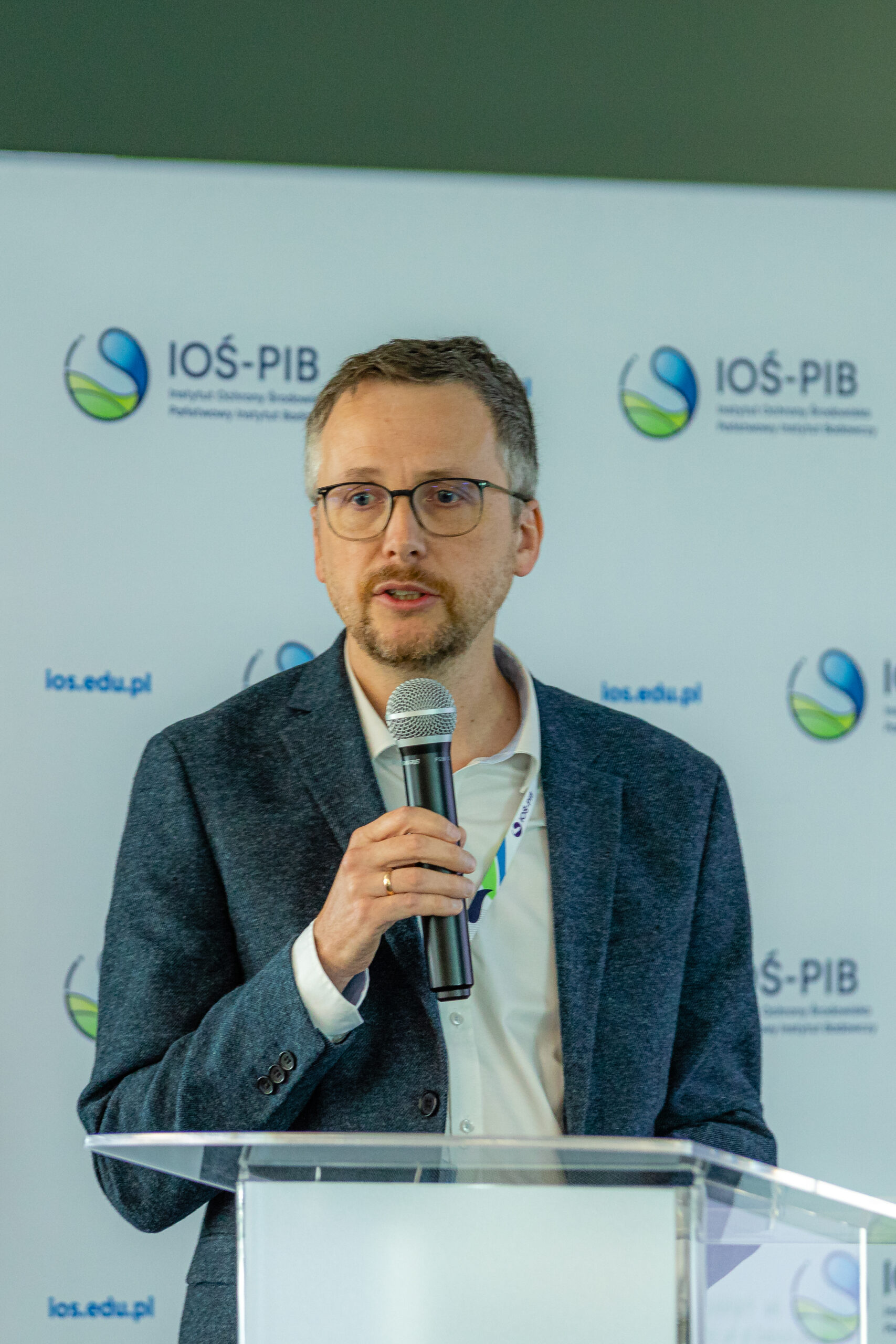
 The workshop was opened by Maciej Cygler (CAKE/IOŚ-PIB), who emphasised the importance of cooperation between Polish and European research institutions in the development of analytical tools supporting climate policy. He noted that the event was part of a series of activities undertaken as part of the LIFE ENSPIRE and LIFE COASE projects, which aim to support the EU ETS reform process and build knowledge and dialogue on the future of the emissions trading system.
Session 1 – FSR EUI presentations
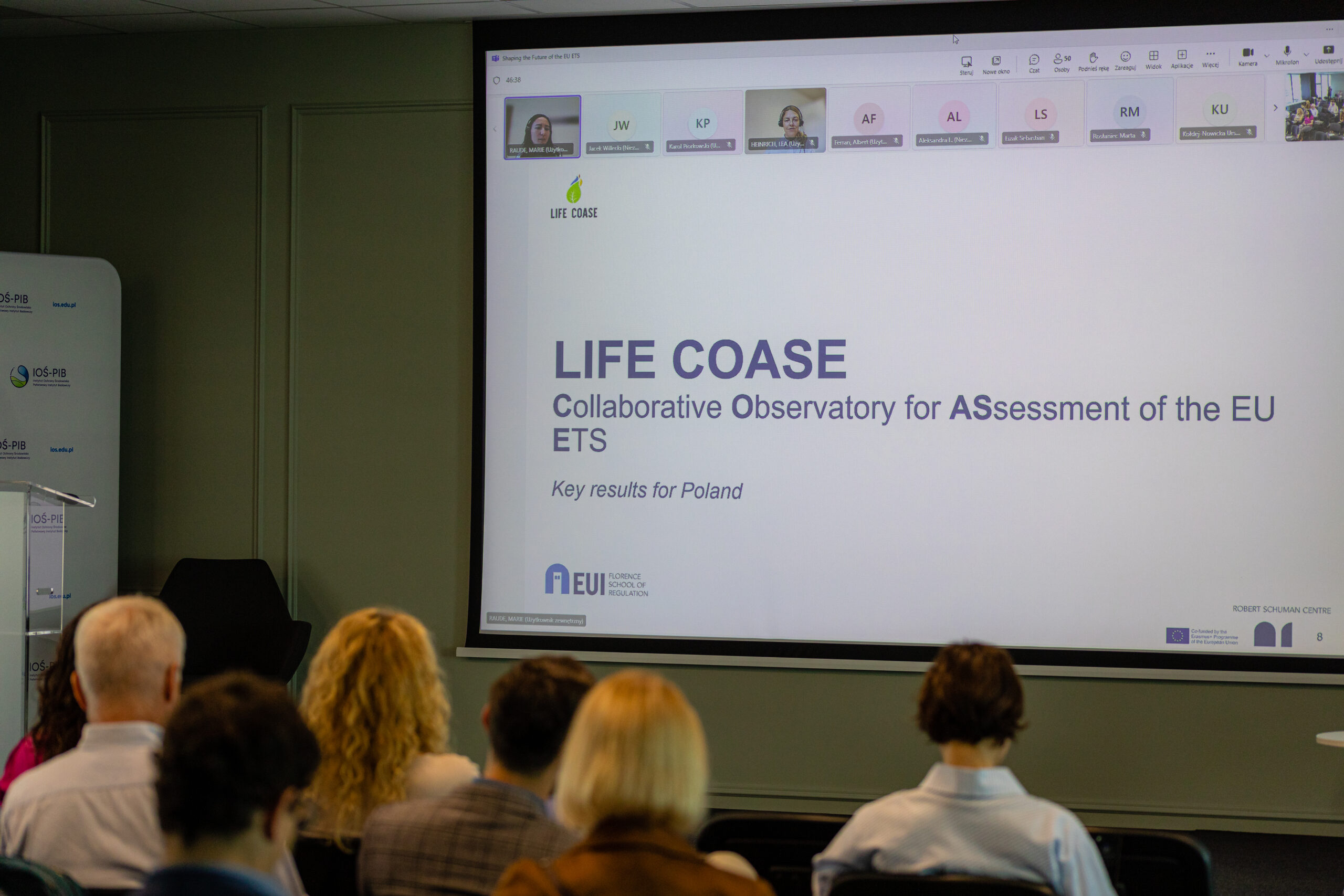
Marie Raude (FSR EUI) opened the first session by presenting the key findings of the LIFE COASE project in a presentation entitled “Key findings from 20 years of the EU ETS“. She presented the results of analyses covering two decades of the EU ETS, pointing to both its effectiveness in reducing emissions and the challenges related to data availability and consistency. She emphasised that the EU ETS is an increasingly complex mechanism, with new sectors being included and inspiring the development of further emissions trading systems around the world. The presentation drew attention to the high share of the energy and industry sector (EU ETS) in Poland in total emissions, but it should be noted that this share has been declining in recent years. An interesting picture is also provided by statistics on entities entering and leaving the EU ETS in Poland – the highest number occurred between the successive phases of the EU ETS in 2008 and 2013, as well as in 2021-2022, during the energy crisis (high inflation, high energy prices and emission allowances). The issues of the deficit of allowances in installations since 2013 and the growing activity of entities on the market were also discussed. Since 2013, Polish installations have begun to experience deficits in allowances due to the smaller number of free allowances, which they must gradually purchase at EU ETS auctions.
Lea Heinrich (FSR EUI) presented a new project – LIFE NETS. It is a continuation of the activities undertaken under LIFE COASE and aims to create a European knowledge centre on the EU ETS. The project will develop a set of indicators to monitor the functioning of the system, analyse market behaviour and the use of auction revenues, and strive to improve data quality and transparency.
Session 2 – CAKE/KOBiZE presentations
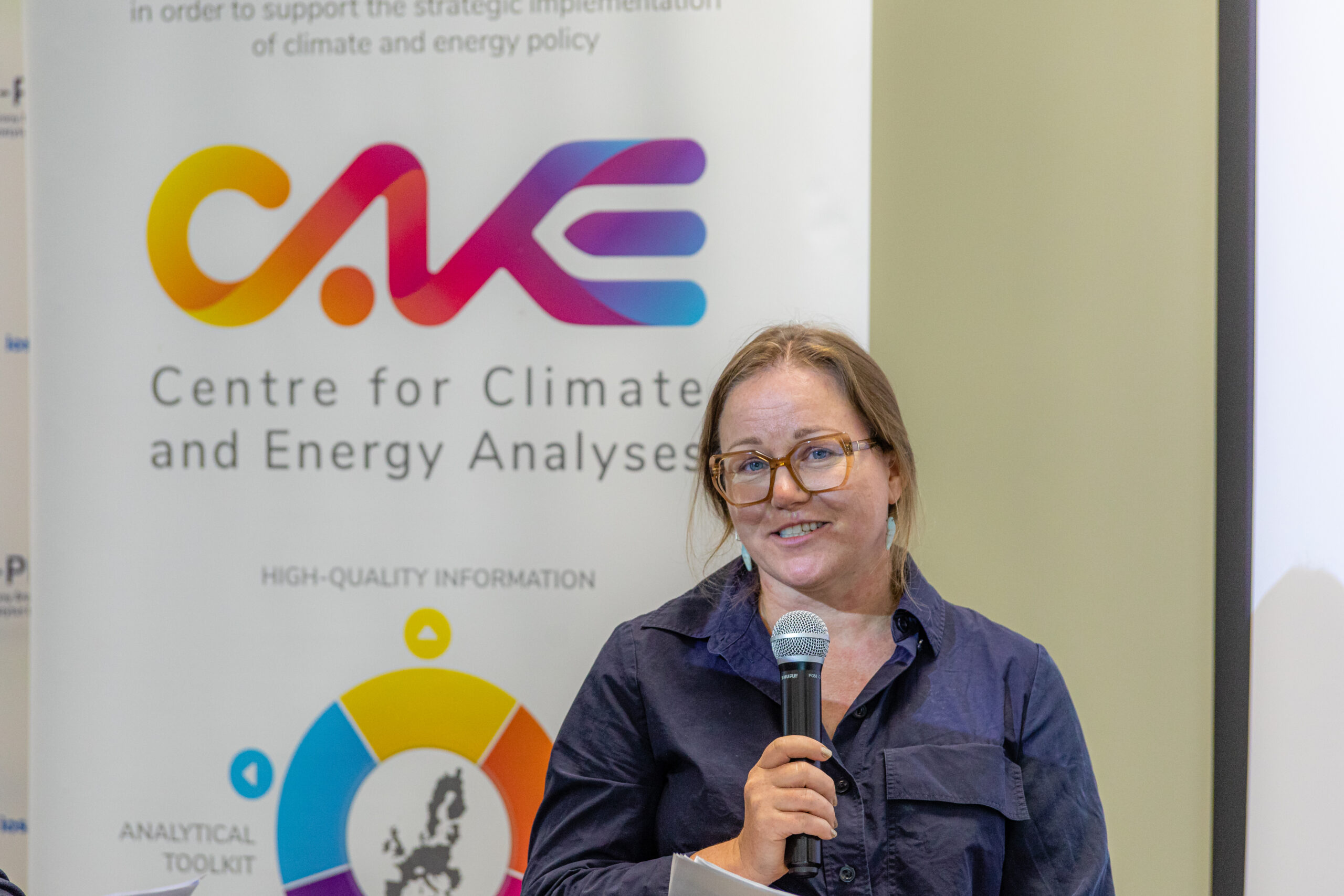
In the second session, representatives of CAKE/KOBiZE took the floor. Marta Rosłaniec presented the EU ETS reforms analysed as part of the LIFE ENSPIRE project, showing the main directions of change in the system and the challenges associated with its extension to other sectors and regions.
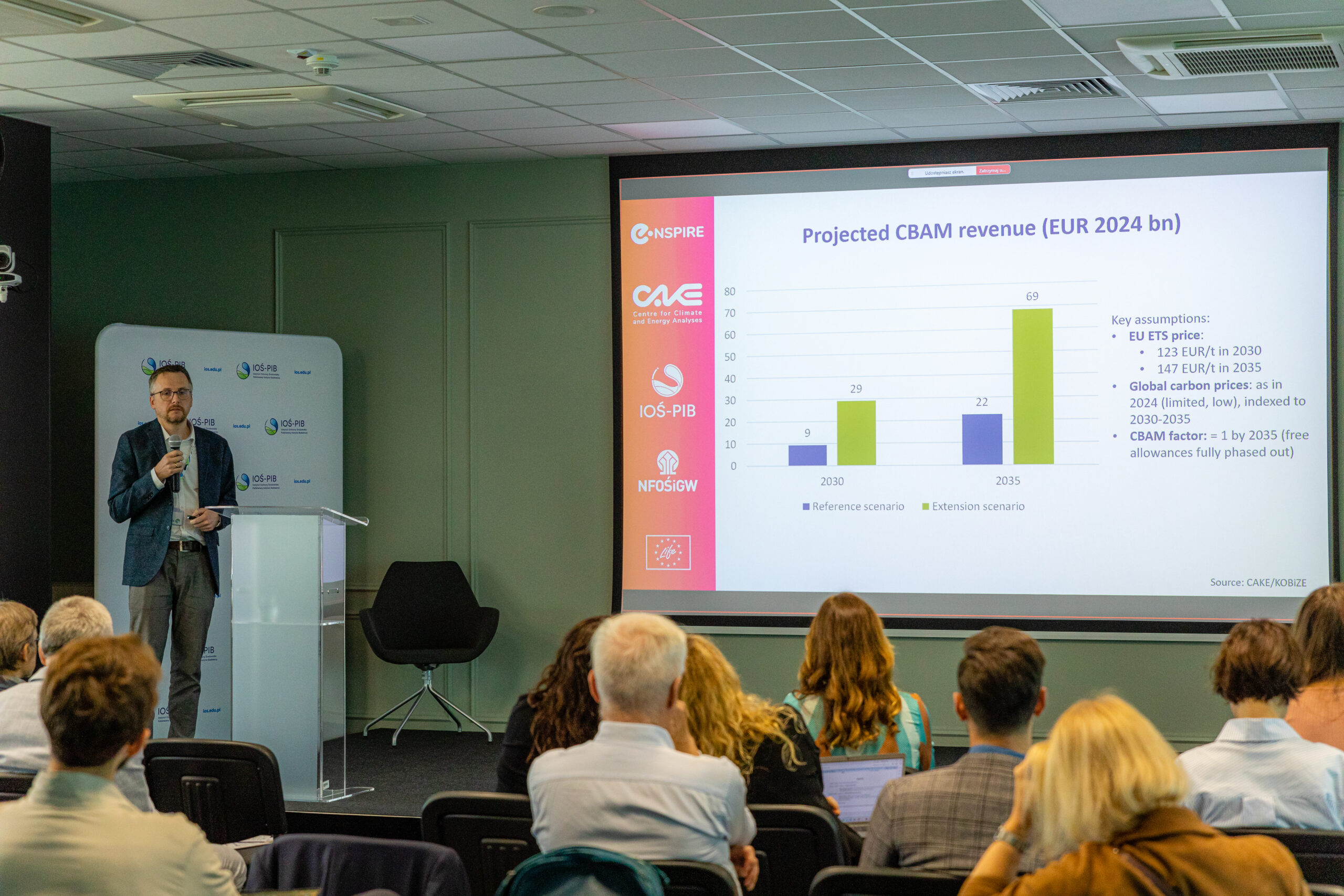
Jakub Boratyński (CAKE/KOBIZE) presented an analysis of the CBAM mechanism in a presentation entitled “EU CBAM: Carbon Content and Cost Estimates for 2030–2035″. Our expert presented two scenarios for the CBAM mechanism – in its current form and after the sectoral scope of the tax has been extended (e.g. to include processed products) – and the results of an analysis showing the potential impact of these scenarios on the volume of emissions exported to the EU, EU revenues from CBAM and import costs. He emphasised that expanding the list of products covered by CBAM would increase import-related emissions several times over, with as many as 15 countries accounting for 75% of embedded emissions in imports to the EU. The cement, iron, steel and aluminium sectors will be most exposed to additional costs. Jakub Boratyński pointed out that although CBAM is conceptually simple, it is complicated to implement in practice. Among other things, the challenge will be to verify the actual emissions declared by importers and the method of determining the prices of CBAM certificates (some non-EU countries may, for example, artificially inflate these prices in their systems). He also noted that a key factor influencing CBAM revenues is the price of emissions outside the EU – current CAKE analyses assume that these may be on average 60% lower than EUA prices, which significantly affects the scale of revenues. For this reason, he stressed that CBAM should not be treated as a permanent source of revenue for the EU budget, but rather as a tool to protect the competitiveness of European industry and an incentive to create emissions trading systems in other countries.
Session 3 – panel discussion
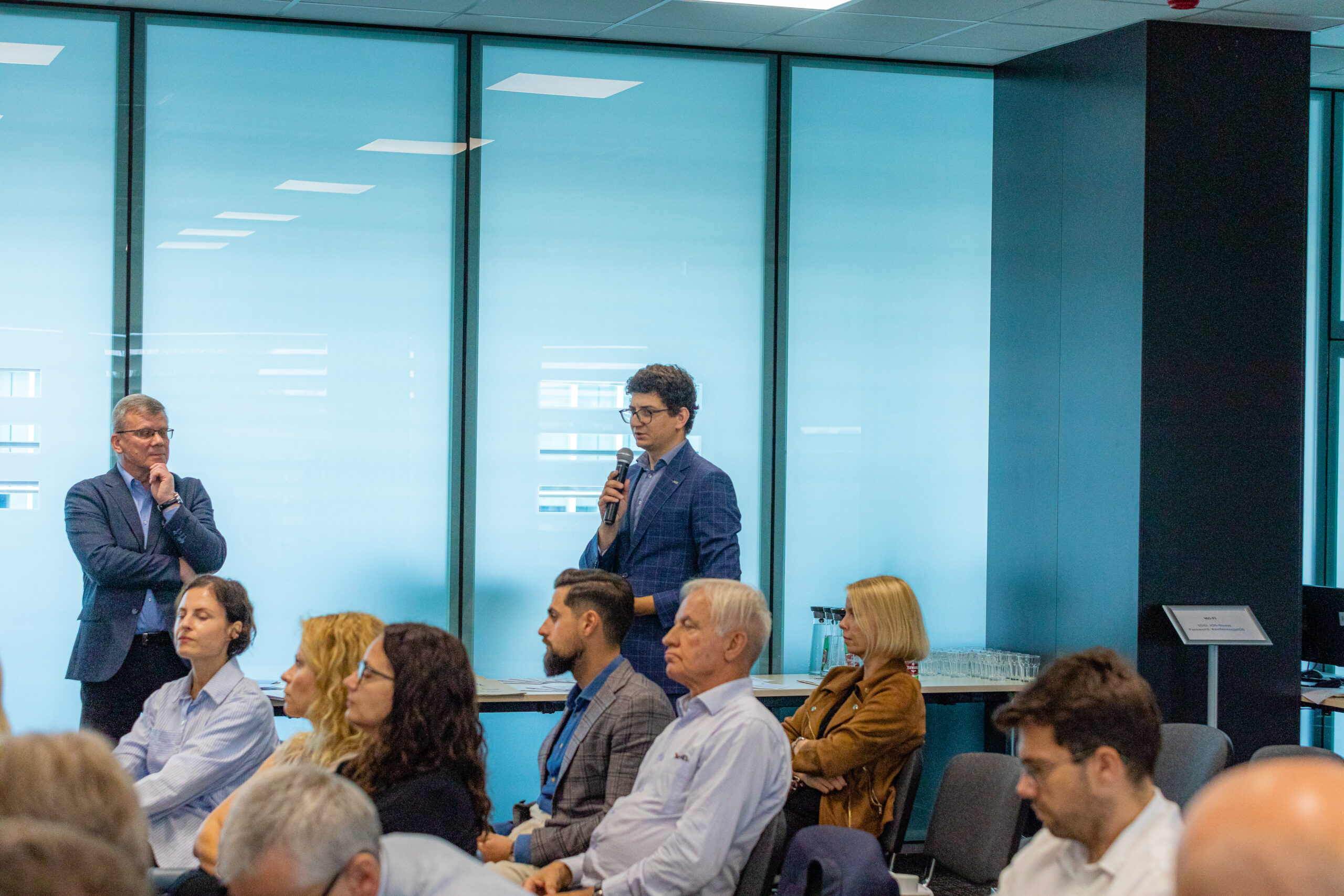
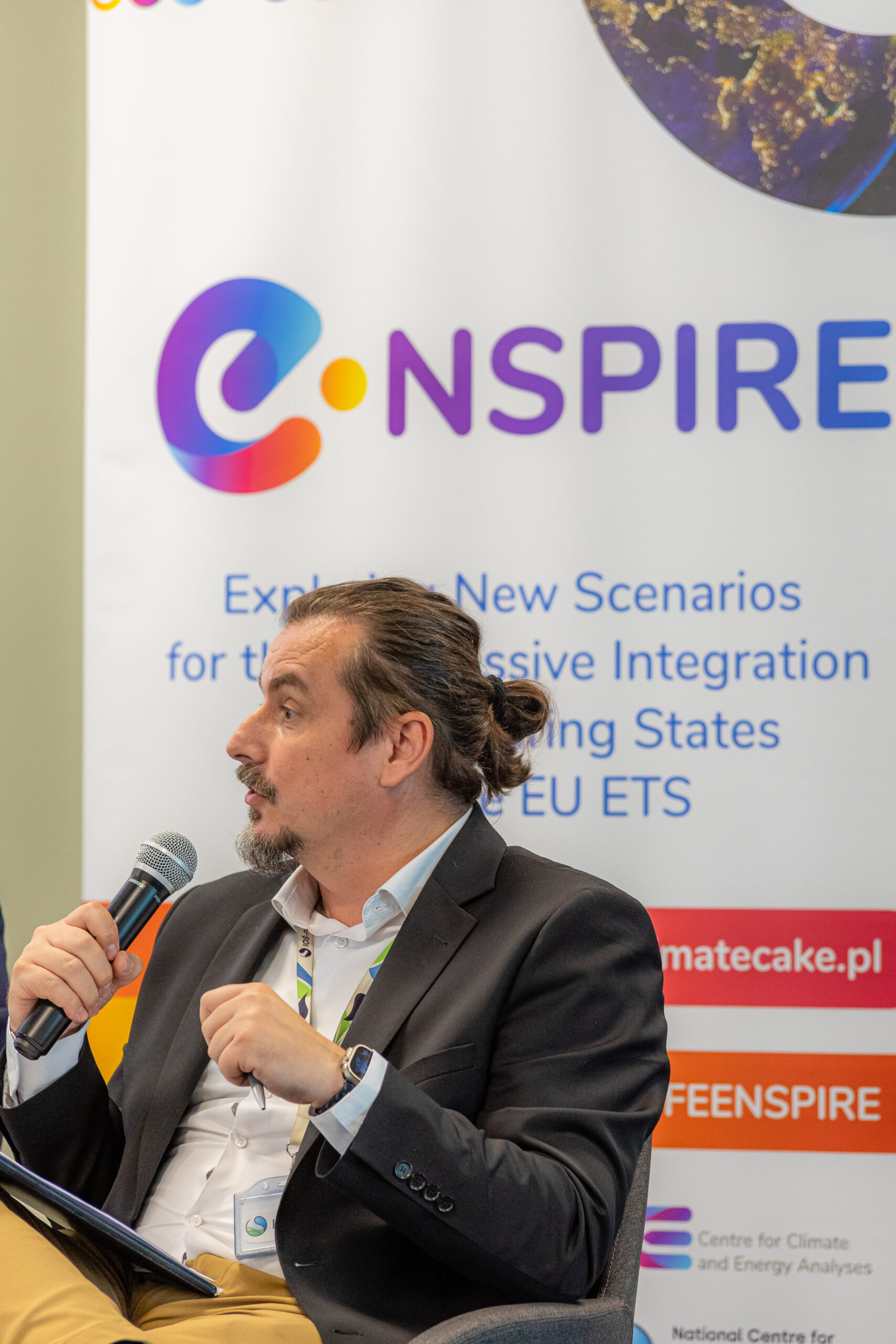
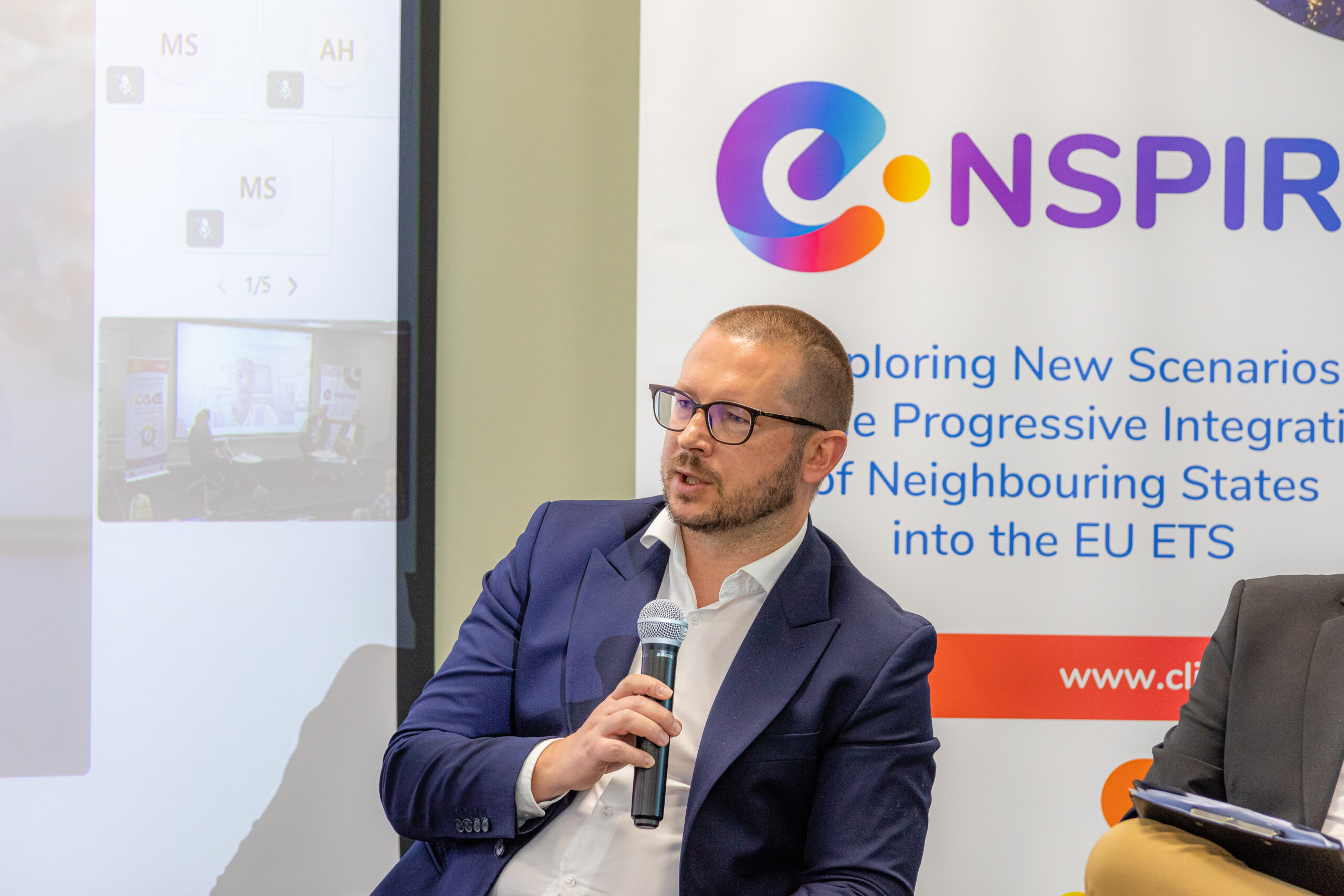
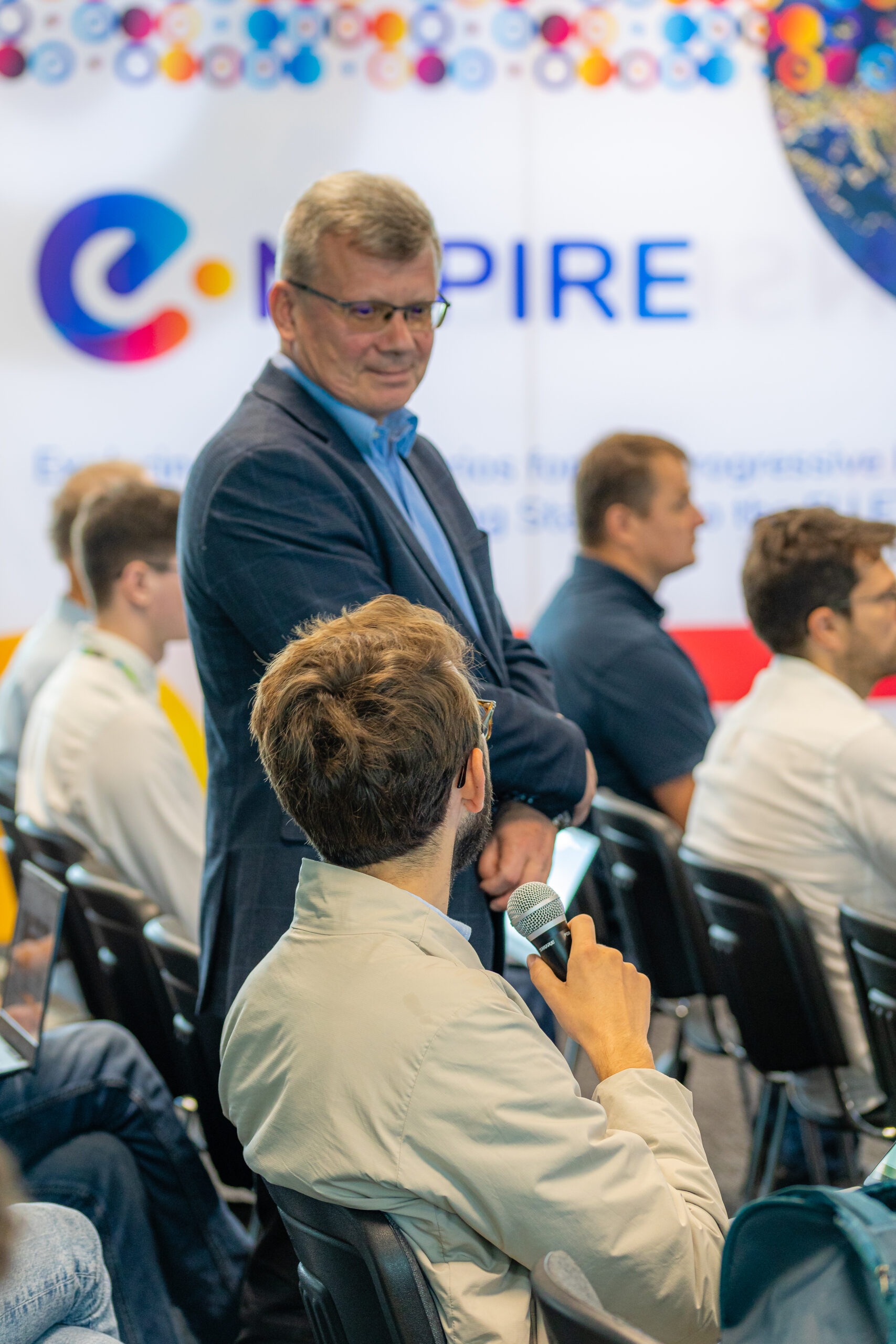
The highlight of the event was the panel discussion “Future of the EU ETS post-2030″, moderated by Maciej Cygler. The discussion focused on the key challenges facing the EU ETS in the perspective of 2040. The panel participants included:
- Robert Jeszke – Deputy Director of IOŚ-PIB, Director of KOBiZE,
- Simone Borghesi – Director of FSR Climate, Professor at EUI, President of EAERE
- Paweł Różycki – Deputy Director of the Department of Air Protection and Climate Change, Ministry of Climate and Environment,
- Renata Auchimik – Expert, PKN Orlen.
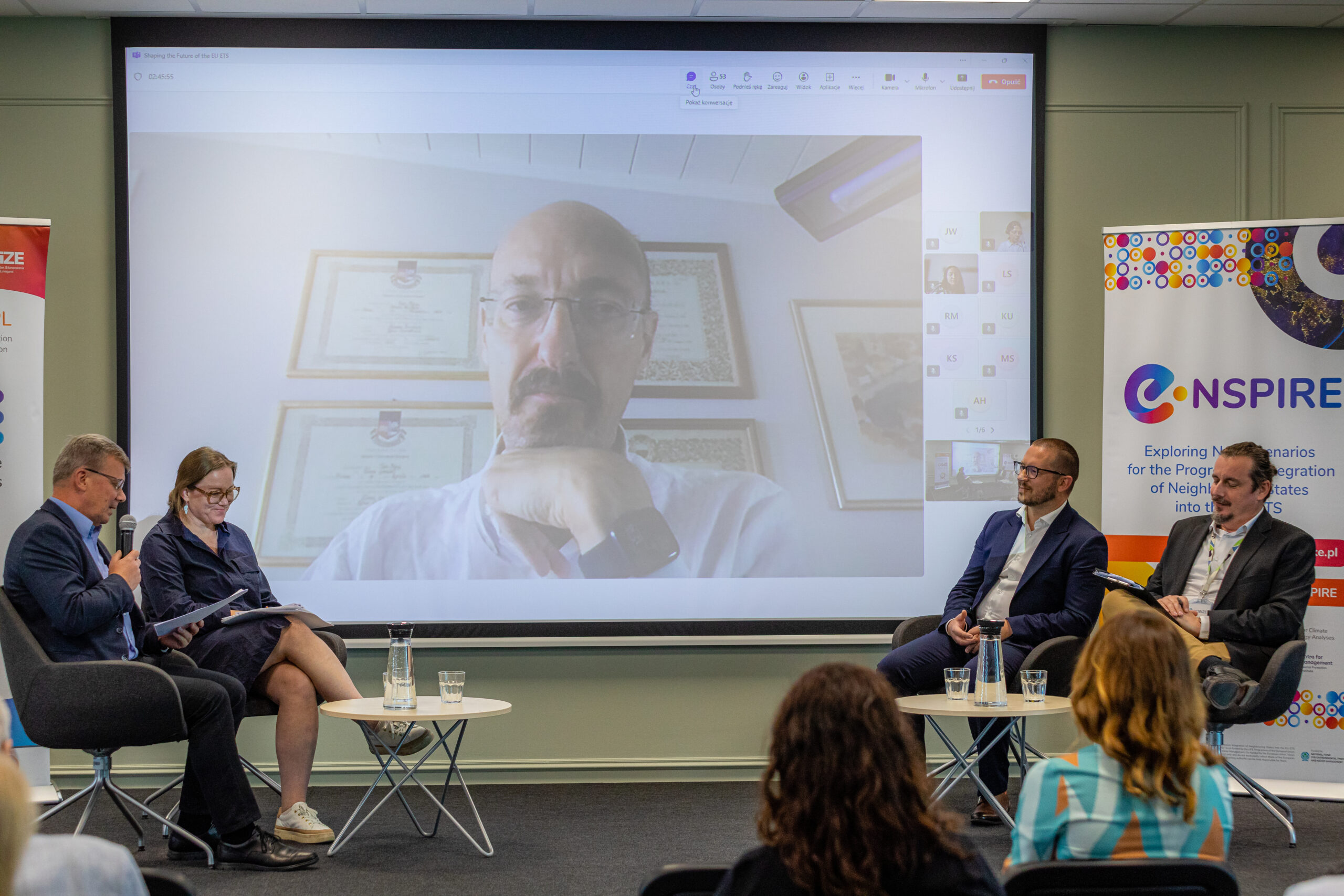
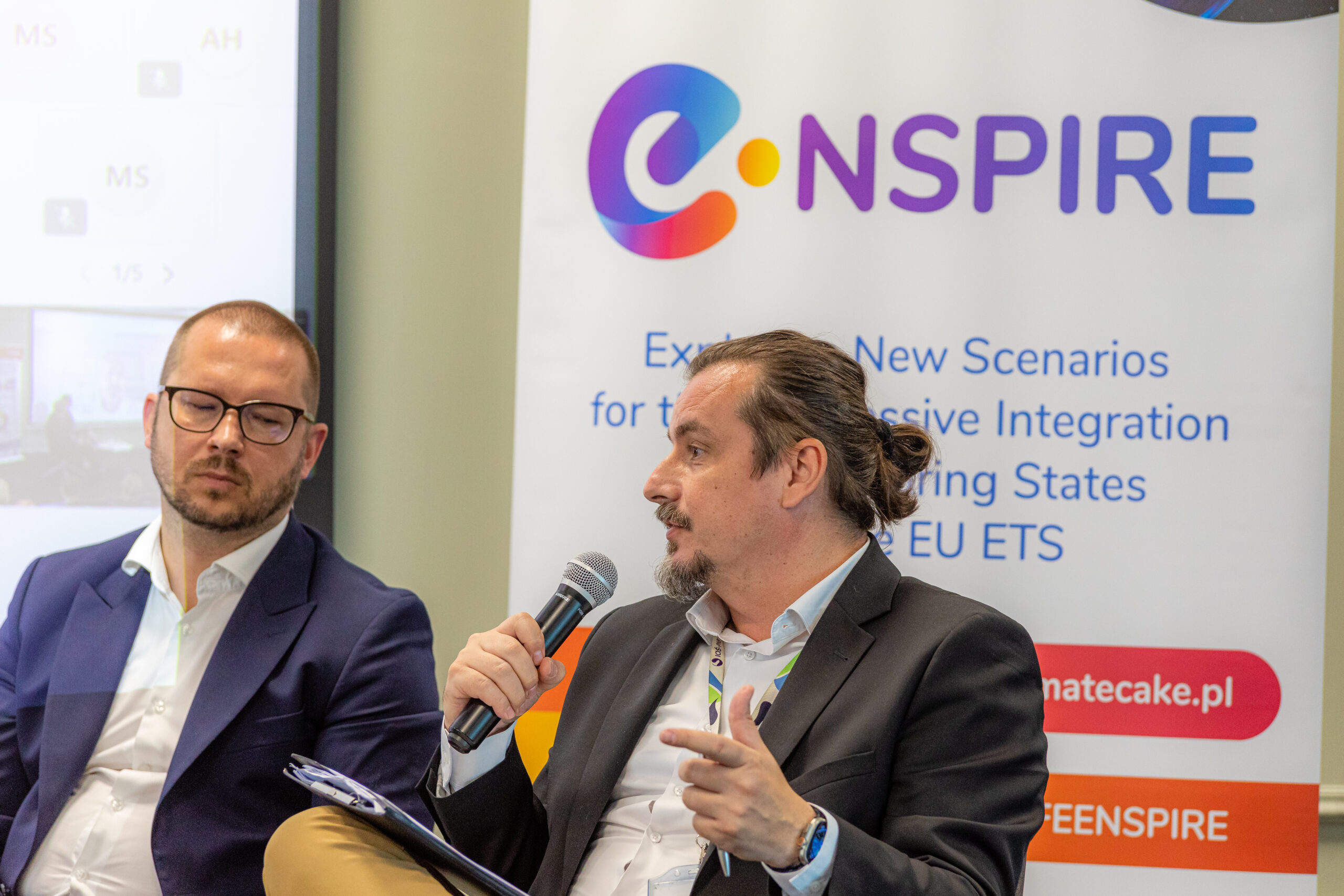
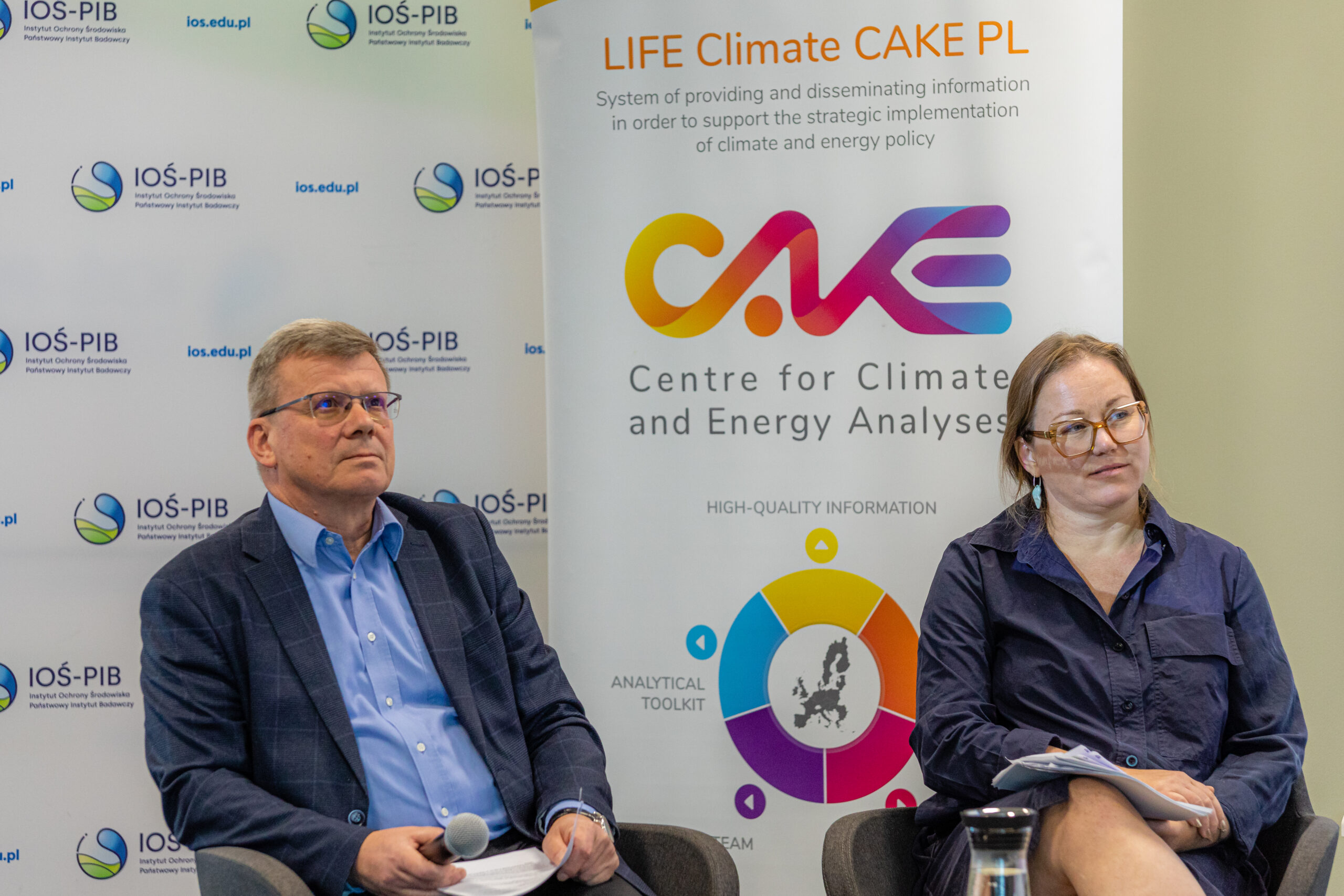
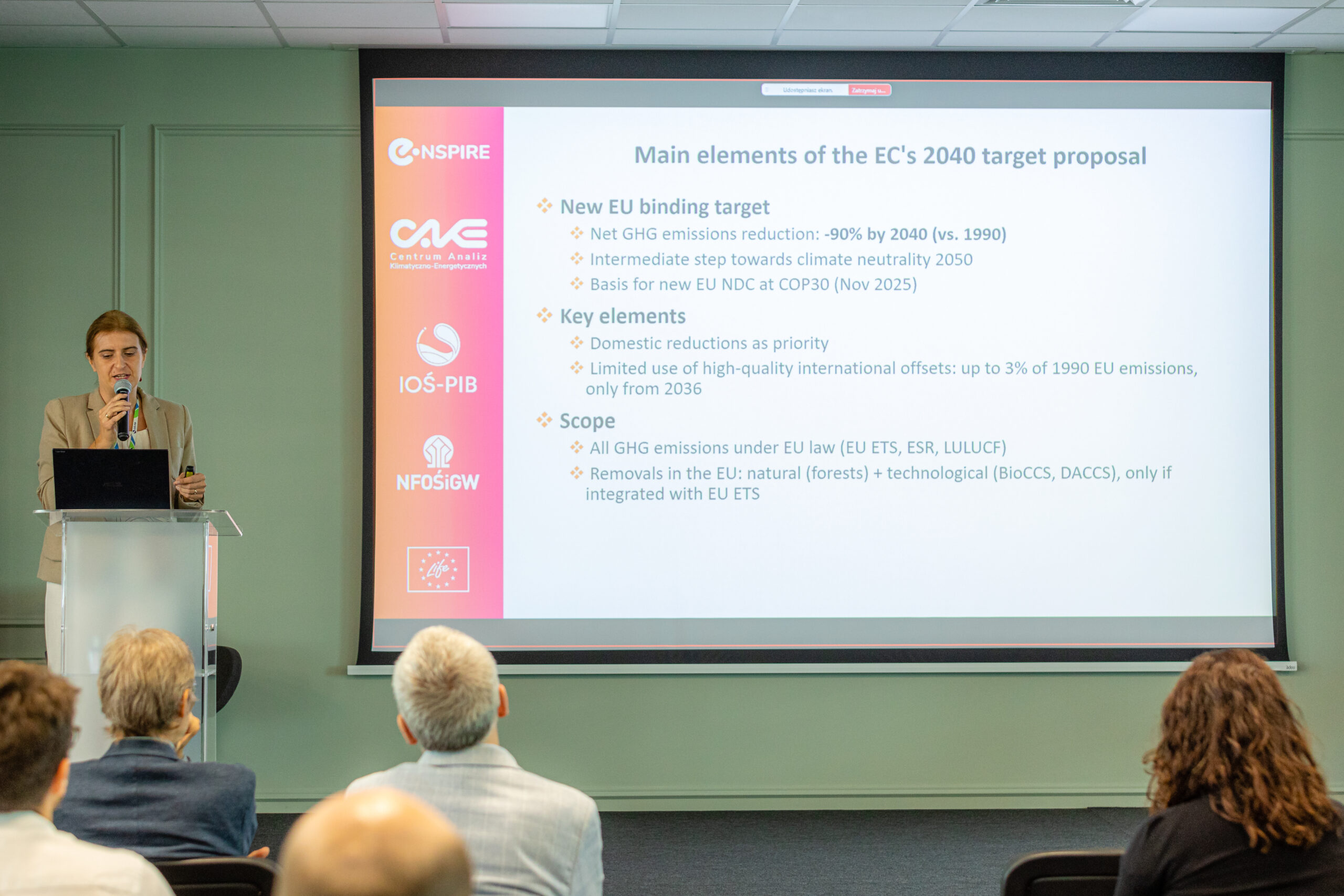
Robert Jeszke (CAKE/KOBIZE) referred to the challenges associated with achieving the emission reduction target by 2040 and the direction in which the EU ETS should evolve. He emphasised that if work on the new architecture of the system is not undertaken at an appropriate pace, it will be extremely difficult to achieve the reduction target. It is crucial to find the right balance between reducing emissions and maintaining economic growth in the EU, as the keep the competitiveness of European industry remains an absolute priority. He pointed to the growing problem of carbon leakage and the role of CBAM as a new instrument for protecting industry, which (although not an ideal solution) is of global importance. He also noted the need to include small installations in the system and to ensure a smooth transition between ETS1 and ETS2, which will generate completely different costs for participants. He paid particular attention to the role of offset units and removals (CDR), emphasising that in the future it will be necessary to create a new institution to manage these instruments. He also referred to the importance of international cooperation, both through the development of LIFE projects analysing systems outside the EU and through the use of offset units under Article 6 of the Paris Agreement. According to Robert Jeszke, the possibility of using offsets should be greater than the currently proposed limit of 3%, while ensuring the quality and credibility of credits introduced to the market. Robert Jeszke pointed out the need to reconsider the future of the MSR mechanism, which no longer fulfils its role as it was designed in completely different economic circumstances. He proposed the creation of a European Central Carbon Bank (ECCB) to manage both the MSR reserve and new instruments such as offset units and CDRs. This would make it possible to respond flexibly to future price fluctuations and ensure greater stability of the system. He also stressed that the EU ETS needs flexibility, predictability and pragmatism, which are often lacking in EU regulations. Removals, although very costly, will have to be incorporated into the system through instruments such as contracts for difference (CfDs). At the same time, it will be necessary to develop cooperation with other regions to support global emission reductions, rather than focusing solely on the EU internal market.Referring to the future of ETS2, Robert Jeszke noted that its introduction is a natural evolution of the system and a necessary step towards reducing emissions in sectors that have not been covered yet. However, he pointed out that the situation in individual Member States varies greatly, so it will be crucial to allow sufficient time for adjustment and to consider possible exemptions for selected countries.
Simone Borghesi (FSR EUI) emphasised the inspiring nature of the projects carried out by CAKE and IOŚ-PIB and their importance for the further development of the ETS. He pointed to the need to consolidate the system and make fuller use of auction revenues, which can effectively support emission reductions if properly communicated and transparently used. He attached particular importance to better access to ETS data – without fast and full access, it is difficult to make reliable recommendations. To this end, the new FSR project will develop activities to improve transparency, data visualisation and communication. Referring to the MSR, Borghesi acknowledged that it works well but needs reform – primarily to be transformed into a price mechanism to increase the predictability of the system. The expert also emphasised the international dimension of the ETS, which is key to achieving climate neutrality. He stated that the 2040 reduction target is realistic but requires strong political will. The ETS should become a benchmark for other regions of the world, showing that ambitious climate policy can go hand in hand with economic development.
Paweł Różycki (Ministry of Climate and Environment) pointed out that intensive negotiations on climate policy until 2030 are currently underway, and talks on a new target for 2040 will begin next year. He emphasised that the geopolitical situation is of key importance, especially the war in Ukraine, which forces us to take into account the need to increase military production. In this context, solutions are being considered that would allow ETS relief for sectors that support the defence industry, such as chemicals, steel and cement. Referring to the competitiveness of European industry, Różycki referred to Mario Draghi’s report, which points to the challenges posed by China’s growing economic power in the EU competitiveness context. In this light, he considered the extension of the CBAM and the continued to keep of some free EUA allowances to be necessary to avoid the risk of EU deindustrialisation. After 2030, he noted, it will be crucial to increase the flexibility of the EU ETS, including through the wider use of compensation mechanisms such as removals and offsets. In this regard, the ECCB could play an important role in stabilising the system and reducing costs for industry. Różycki also emphasised the importance of international cooperation and learning from the experiences of other countries, especially neighbouring countries facing similar challenges. Poland should actively use these good practices in EU negotiations and listen carefully to the voice of domestic industry. With regard to the future of the MSR, he noted that the current system is not sufficiently predictable. In the long term, it may be necessary to transform it into an ECCB, which would better respond to the challenges of the ‘end game’ in EU ETS.
Renata Auchimik (PKN Orlen) pointed out that the funds available under initiatives such as the Clean Industrial Deal amount to only a few million EUR, while the real investment needs of the industrial sector are around EUR 15 billion per year. For this reason, companies are concerned about competitiveness (especially in the refining and chemical industries), where the costs of emissions exceed the benefits of mechanisms such as CBAM. Auchimik pointed out that the MSR, through the invalidation mechanism, has effectively reduced the supply of allowances (over 2.5 billion EUAs), which in practice acts as an additional, hidden reduction target. As a result, the export of refinery products is becoming difficult, and the lack of support (e.g. extended free allocation for exports) threatens deindustrialisation: some companies may disappear from the market. In its recommendations on the EU ETS, it emphasised the need to maintain some share of free allowances, develop hydrogen infrastructure and support investment.
Summary
The conference organised as part of the LIFE ENSPIRE & LIFE COASE projects created a space for the exchange of experiences and views on the achievements to date and future directions for the development of the EU ETS. The presentations and discussions showed how important the reforms of the system are in the context of the EU’s reduction targets for 2040 and climate neutrality in 2050. The event also highlighted the role of LIFE projects, both the completed LIFE COASE and the newly launched LIFE ENSPIRE and LIFE NETS, in building knowledge, creating analytical tools and supporting decision-making at national and European level. In addition, the support provided by CAKE/KOBiZE, our projects, analyses, results and activities help us in our daily work and are invaluable support for the work of the central administration.