Reset ustawień
 Kontrast
 Widok
Widok Czytelność
 Czcionka
 Znaki
Znaki Interlinia
 Słowa
Słowa Akapity
 Deklaracja dostępności



CAKE at the EUI Climate Week, 5-7.05.2026
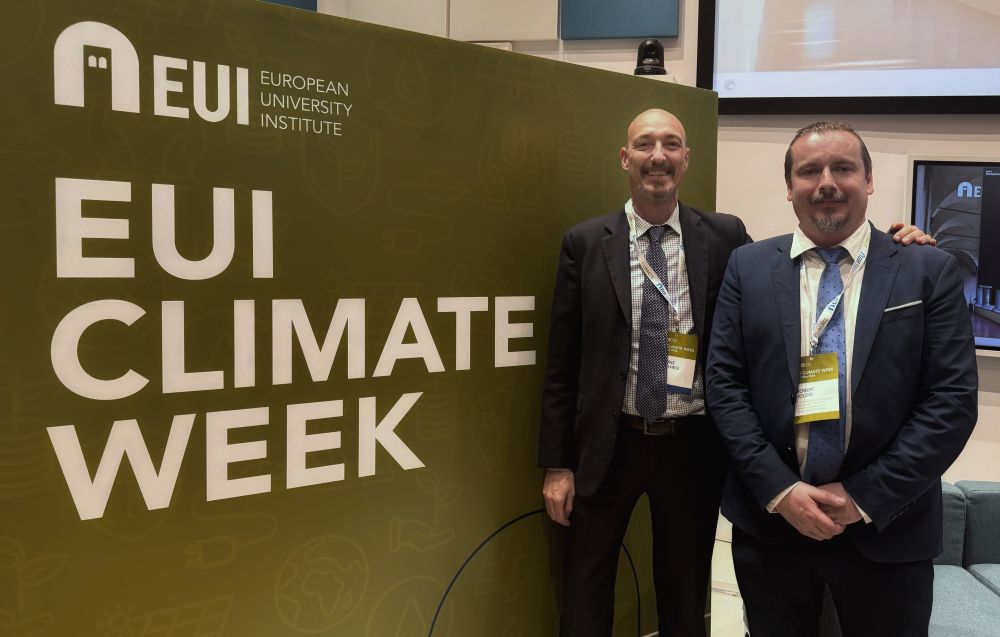
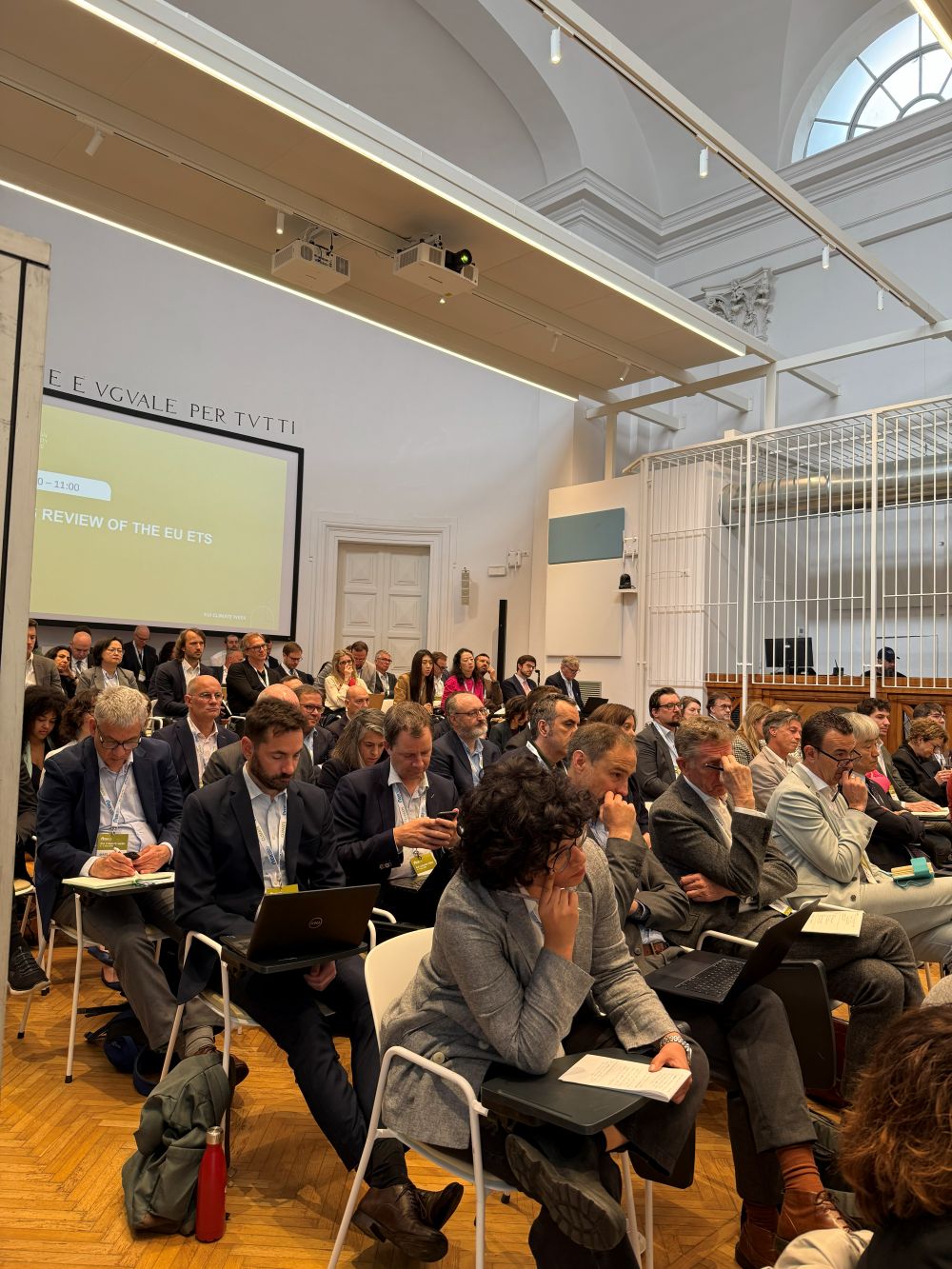
The latest edition of the EUI Climate Week 2026 conference, organised by the European University Institute (EUI), took place in Florence from 5 to 7 May 2026. This year’s event was held under the theme “Transition in Times of Geopolitical Pressure. Core Issues for the Second Half of the EU Commission 2024–2029” and was dedicated to the most important challenges facing the future of European climate and energy policy in the context of growing geopolitical pressure.
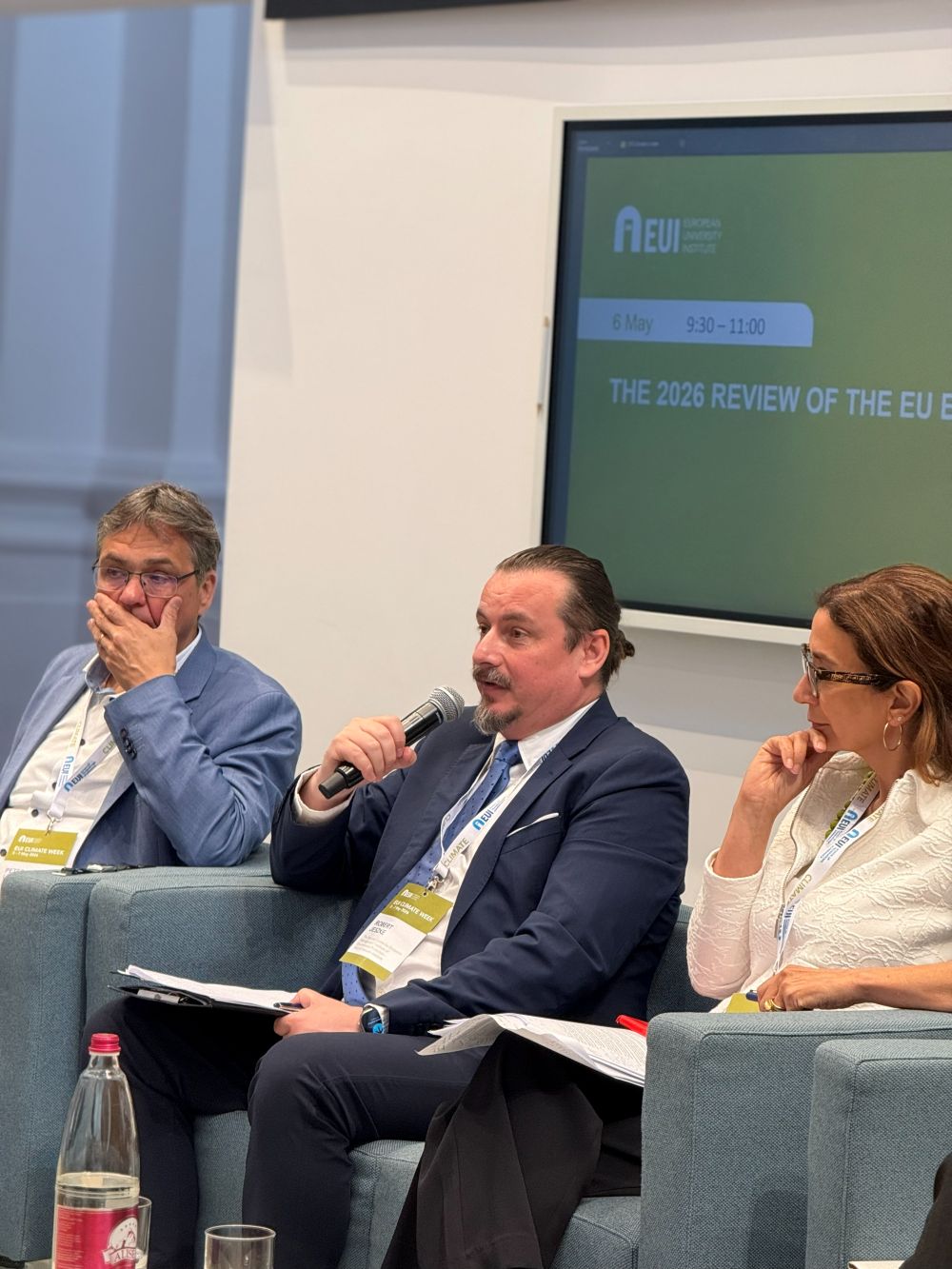
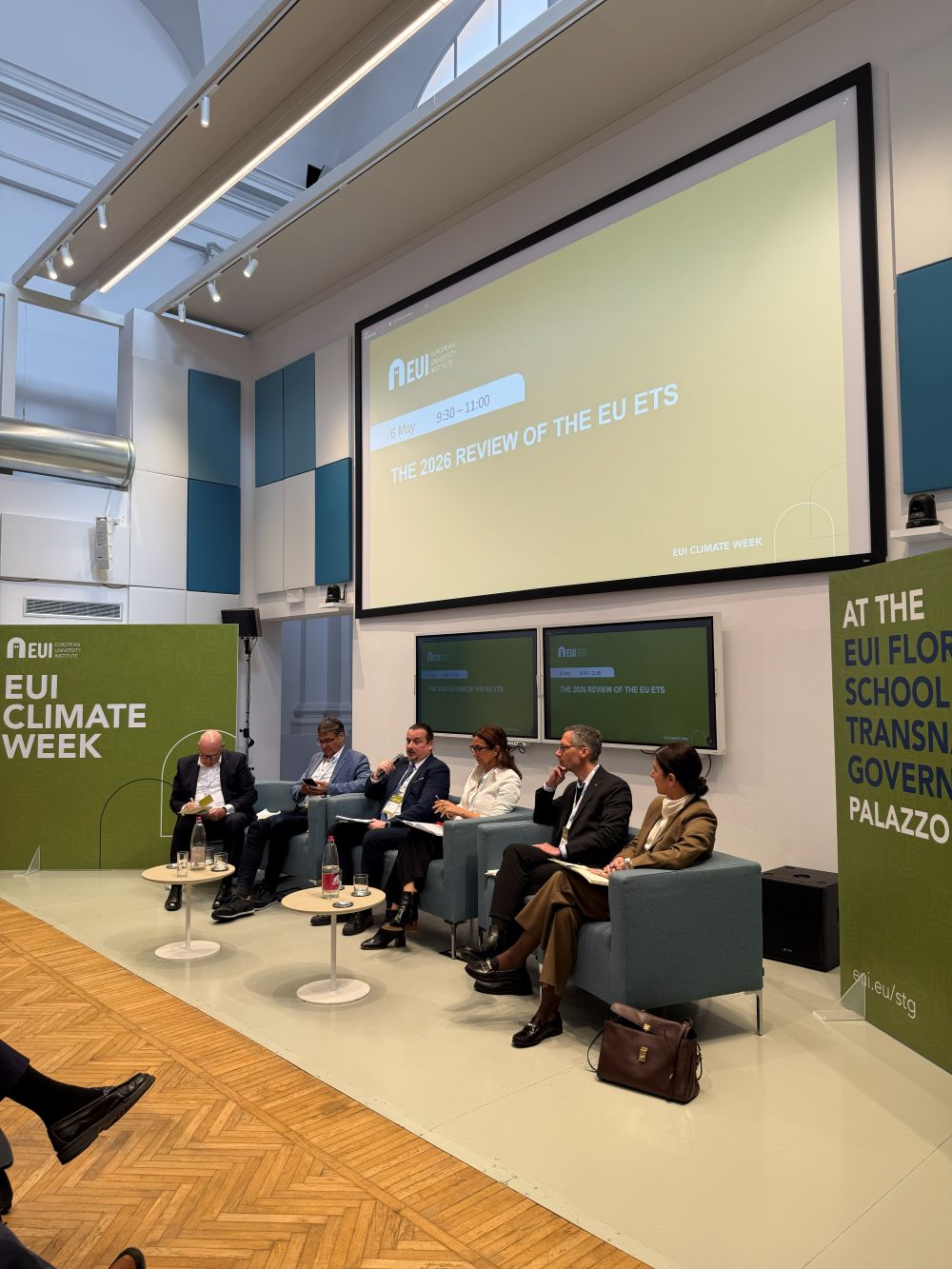
The conference was attended by Robert Jeszke, Deputy Director of IOŚ-PIB for Emissions Management and Head of the National Centre for Emissions Balancing and Management (KOBiZE), representing IOŚ-PIB/KOBiZE/ CAKE in expert debates concerning, among other things, the future of the EU ETS, the reform of the Market Stability Reserve (MSR) mechanism, the use of international offset units, the financing of industrial decarbonisation, and the gradual integration of candidate countries into the EU’s climate architecture. During numerous expert sessions and panel discussions, it was emphasised that the EU ETS is currently entering a new phase of development. The system is no longer viewed solely as an instrument for reducing emissions, but as one of the key elements of the EU’s economic, industrial, energy and geopolitical policy.
The conference was attended by Robert Jeszke, Deputy Director of IOŚ-PIB for Emissions Management and Head of the National Centre for Emissions Balancing and Management (KOBiZE), representing IOŚ-PIB/KOBiZE/ CAKE in expert debates concerning, among other things, the future of the EU ETS, the reform of the Market Stability Reserve (MSR) mechanism, the use of international offset units, the financing of industrial decarbonisation, and the gradual integration of candidate countries into the EU’s climate architecture. During numerous expert sessions and panel discussions, it was emphasised that the EU ETS is currently entering a new phase of development. The system is no longer viewed solely as an instrument for reducing emissions, but as one of the key elements of the EU’s economic, industrial, energy and geopolitical policy. During the debates, it was noted that the EU ETS review planned for 2026 will be strategic in nature and go beyond a standard revision of the system’s parameters. Discussions centred on the question of how, after 2030, to reconcile the EU’s ambitious climate targets with the need to maintain industrial competitiveness, energy price stability, market liquidity and public acceptance of the energy transition.
Robert Jeszke emphasised the need for the EU ETS to continue evolving, including a review of the linear reduction factor after 2031 (Linear Reduction Factor, LRF) and ensuring adequate liquidity in the emissions allowance market. He pointed out that excessive ‘rigidity’ in the supply of EUAs (understood as a lack of flexibility in the system) could lead to increased price volatility and political tensions surrounding the EU ETS. The future of the Market Stability Reserve (MSR) was also a key element of the discussion. It was pointed out that after 2030, the main challenge may not be a surplus, but a shortage of allowances and limited market liquidity. The need to increase the flexibility of the MSR mechanism, to review the rules for cancelling allowances, or to link the MSR to the future management of offset units (so-called removals and international units) was emphasised. In this context, Robert Jeszke highlighted the growing need for a more structural and institutional approach to CO2 market management. One of the solutions analysed was the concept of establishing a special institution, namely the European Central Carbon Bank (ECCB), which could play a significant role in managing market liquidity, removals, and the use of international offset units, whilst maintaining the environmental integrity of the EU ETS.
The conference also served as a forum for discussion in light of current geopolitical challenges, including the war in Ukraine, global tensions and growing economic competition between the EU, China and the United States. The discussions highlighted that EU climate policy is becoming increasingly intertwined with issues of energy security, industrial resilience, strategic autonomy and EU enlargement policy.
Participation in EUI Climate Week 2026 was an excellent opportunity to present KOBiZE/CAKE’s experiences and promote ongoing projects, in particular LIFE ENSPIRE, notably through a networking meeting with Professor Simone Borghesi, Director of FSR Climate from the LIFE NETS project, as well as an exchange of views with representatives of European institutions, expert communities, the industrial sector and EU ETS market participants.
Back